|
In this issue...
- A Welcome from Staff
- Announcing.... our Go Fund Me campaign!
-
Xcel is trying to make a controversial Gas Utility Infrastructure Cost (GUIC) rider permanent and to raise rates for gas customers
- PUC enables Xcel's monopoly ownership of local batteries
- Community Solar shows benefits while increasing network upgrade costs hamper larger projects
- Action Alert (and op-ed!) for plug-in solar legislation
- Join Good Energy Connections and Partners April 25th
A Welcome from staff
Close to 35 total people attended the Powerful Conversations event we put on at Macalester College on March 29th. Thank you to all who came by and a warm welcome to anyone receiving a monthly Community Power e-newsletter for the first time.
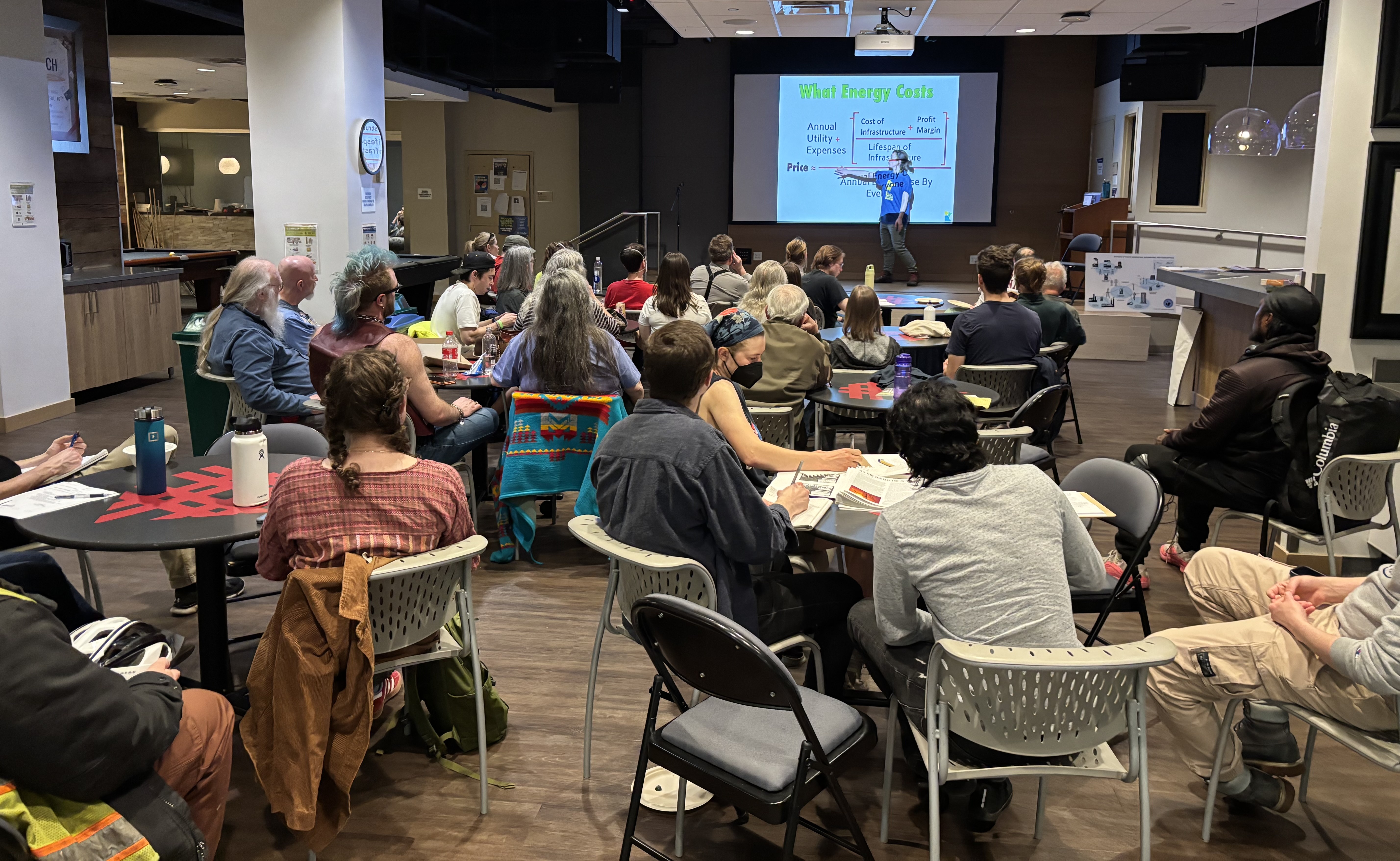
For anyone who missed the event, we have one handout we shared: a new article called “It’s time for Electric Democracy,” written by Community Power founding board member and author George Crocker. Stay tuned for our coming blogpost about it in our next monthly newsletter. George is eager to share a vision of an energy management system that finally provides a system-wide alternative to the utilities’ familiar central-station paradigm.
Below, we will pick up from where we left off with our March newsletter on the topics of monopoly ownership of batteries for energy storage, utility profits, plug-in solar legislation and an encouraging report on community solar.
|
|
|
Please share our Go Fund Me Campaign!
As we keep telling you, right now in Minnesota, families are paying more for energy while billionaires and corporate utilities tighten their grip on our system.
At Community Power, we’re fighting to change that, but we’re facing a critical moment.
In the past year alone, we’ve lost over $575,000 in expected federal funding due to sudden program cancellations—including a $375,000 Environmental Justice grant from the EPA that was already supporting our work, then arbitrarily terminated in May, 2025.
We refuse to step back. But we need your help to keep going.
|
|
Forcing utility customers to pay more to prolong fossil fuel dependence
|
Xcel Energy seeks to raise rates for their gas customers by 8.7%
|
|
Xcel and other gas utilities want to:
-
Upgrade fossil gas infrastructure without having to go through a standard regulatory review…
- …and to raise the costs we pay for that purpose.
Specifically, Xcel Energy is trying to make a controversial -- and costly -- bill rider permanent in Minnesota.
In Minnesota, the Gas Utility Infrastructure Cost rider (GUIC) has contributed to a 30% increase in customers' gas utility costs over the past 15 years according to Commerce Assistant Commissioner Sydnie Lieb in her remarks in a video testimony linked in the article here:
Xcel wants costly bill rider made permanent, prompting calls for greater oversight - Energy and Policy Institute
By Karlee Weinmann. March 30th, 2026
The provision is set to expire in June 2028. However, utilities led by Xcel are pushing legislation, House File 3830/Senate File 3954, that would remove that sunset date and make it permanent.
Other states have restricted or entirely eliminated equivalent riders, since they have become a significant financial drain on utility customers.
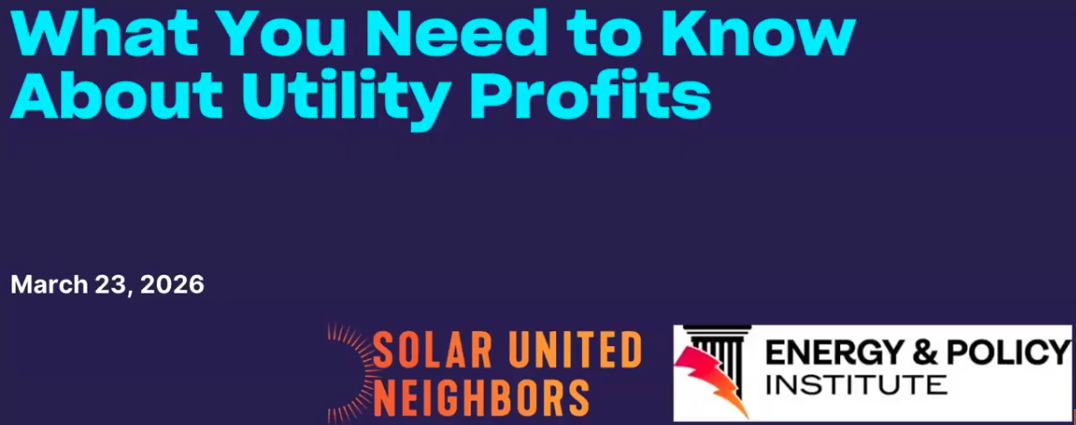
On a related topic, here is the recording of the March 23rd webinar that we shared about in our previous newsletter
|
|
|
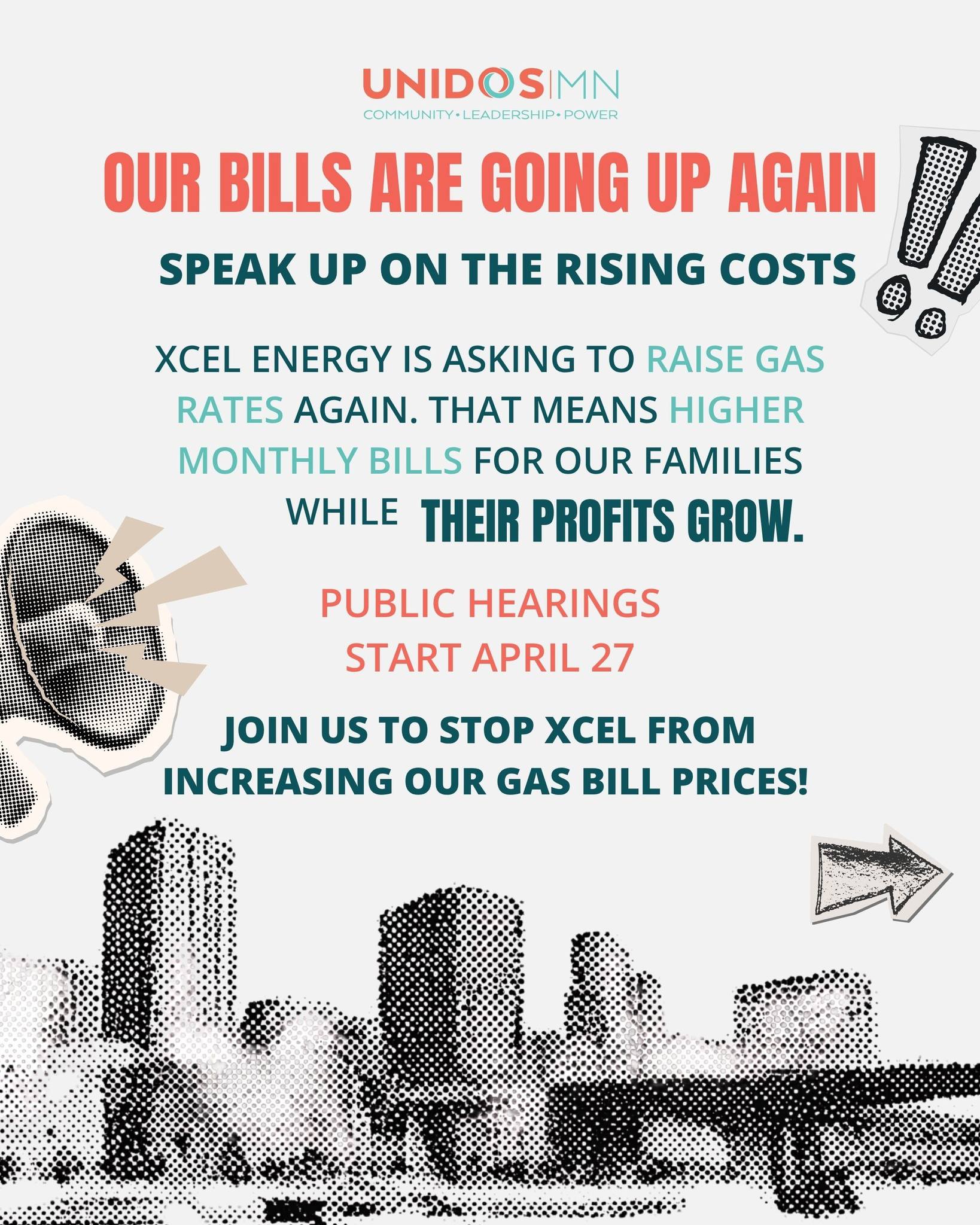
If approved by the MN PUC, it would add $7 to the average monthly bill. Unidos MN is mobilizing commentary for public hearings on this Xcel Gas Rate Case.
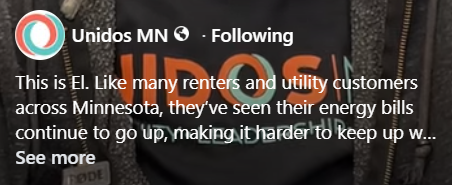
Unidos has shared an example comment from a renter sharing their experiences with high bills and energy insecurity.
The Clean Heat Coalition and Third Act Minnesota are providing an in-person public comment workshop on May 6th at 6 PM, where they will guide you on writing a comment about Xcel Energy’s current gas rate case speaking from your values. They will then do the work of sending it in for you!
Here is the RSVP link so the organizers can plan accordingly for dinner, which will be provided.

|
|
The Work _______________________________________________________________________
Advancing Energy Democracy
Organizing our efforts to maximize impact and drive change.
|
|
Community Power channels its expertise into three focused program areas. By addressing challenges at the state, city, and grassroots levels, we’re building a sustainable and equitable energy future for all.
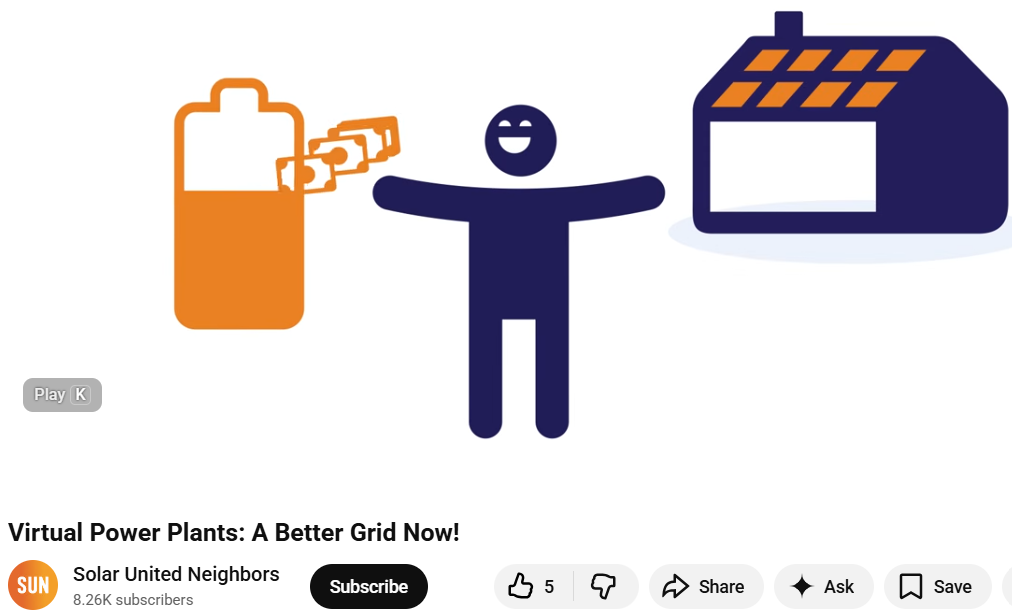
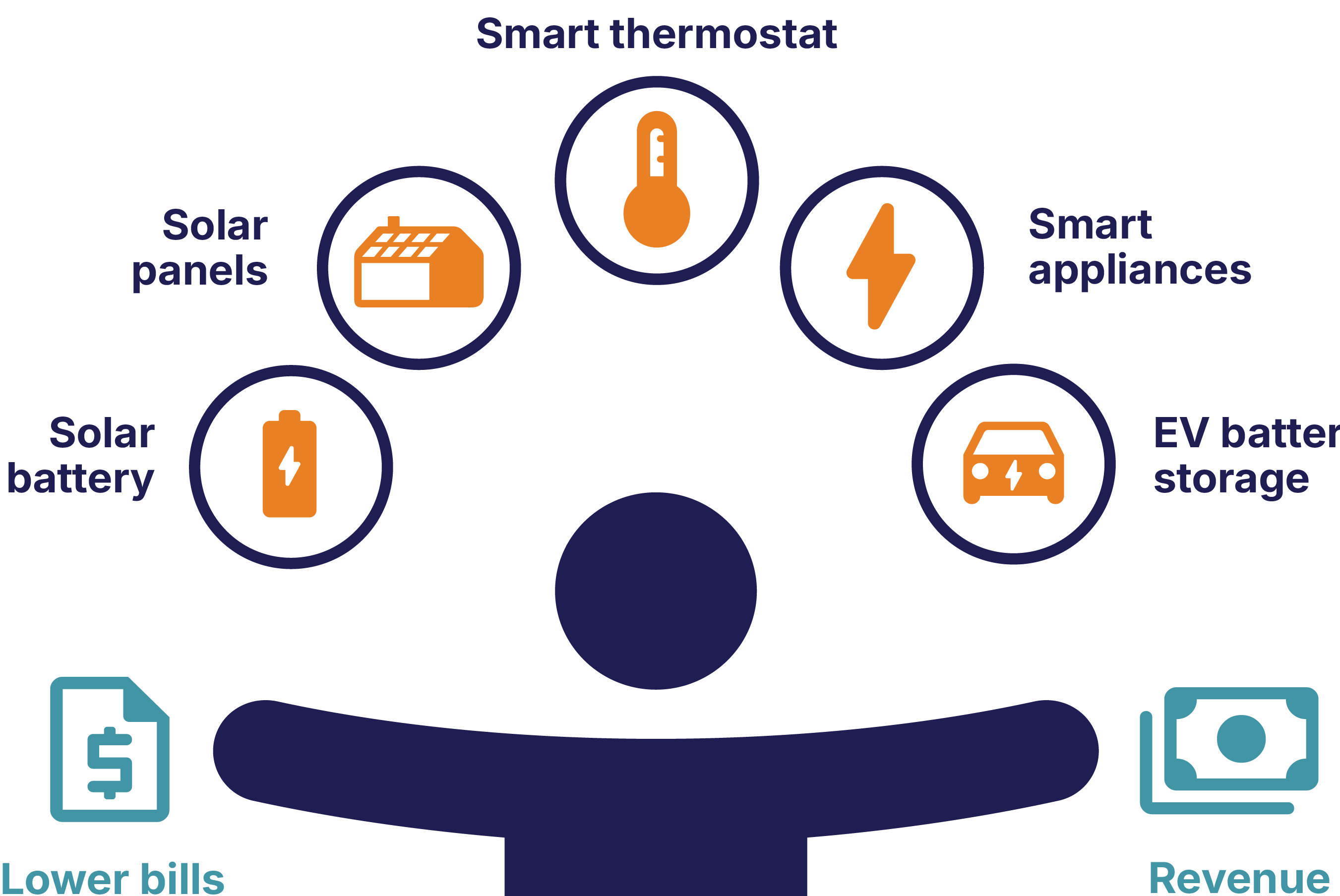
Community Power and partners know that distributed energy storage in local batteries is a key to supporting a more cost-effective electric grid. Here is a short video on this from Solar United Neighbors illustrating how it works: Virtual Power Plants: A Better Grid Now!
While Xcel Energy finally got around to endorsing the idea of distributed energy storage back in 2024, they coupled it with insisting that they must own and profit from all of the battery assets. We covered this story in our previous newsletter and in our latest blogpost that we have now updated: “Xcel’s latest bid to expand their monopoly control of our energy system.”
PUC enables Xcel's monopoly utility ownership of local batteries:
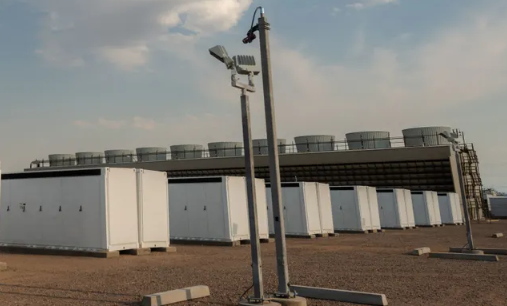
On April 2nd, at a MN Public Utilities Commission (PUC) hearing they approved the pilot project Xcel calls “Capacity*Connect.” Xcel will deploy 50–200 MW of distributed battery storage at a cost of $152–$430 million (Docket 25-378). But frustratingly, if not surprisingly, the PUC declined to challenge the monopoly ownership framework.
What does this mean for you and I? It means Xcel shareholders will get to pocket the clean energy savings that could have gone to customers.
That is because scalable, cost-effective, third-party clean energy solutions will be shut out. The problems and double standards of Capacity*Connect being a closed pilot that locks us into an exclusive utility-owned model are explained in more detail in this press release: "MnSEIA, SEIA, and CCSA Issue Joint Statement on the Approval of Xcel Energy’s Capacity Connect Proposal" |
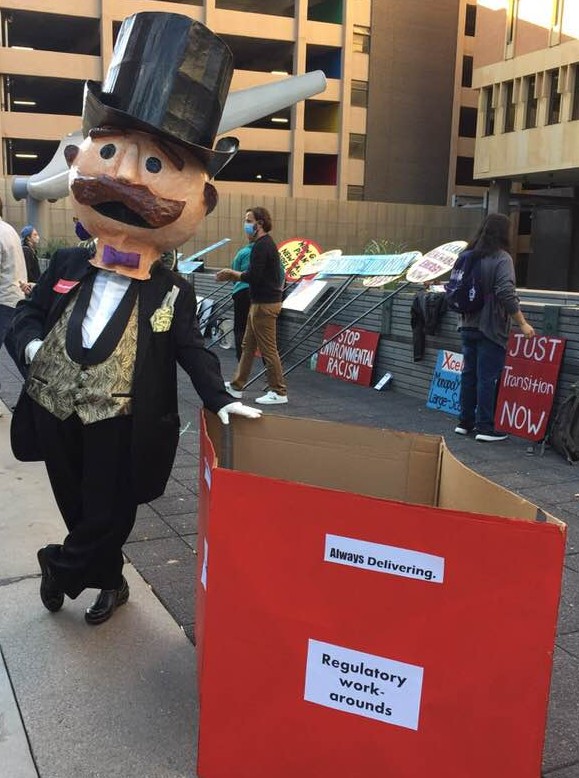
That joint statement also noted that the MN PUC refused to offer ample time to subject matter experts at the hearing such as Clean Energy Economy Minnesota who submitted initial and supplemental comments reflected in the briefing papers and decision option matrix.
It's concerning, however, if MN PUC gives ample speaking time at hearings to parties who are in favor of what Xcel wants while not giving equivalent opportunity to parties who are critical of Xcel’s position. Fair and transparent processes demand that we listen to experts with on-the-ground expertise relevant to the projects that the PUC is deciding upon.
What the MN PUC gave approval to is, technically, a pilot project to inform future development. But if the pilot project shows that it would have been better to incorporate the recommendations of the independent developers, trade associations, and industry experts, they can’t say they weren’t warned.
Another article covering this story gives hope that this initial pilot will set the stage for a more competitive and distributed model in future phases:
Xcel Minnesota is building a first-of-its-kind virtual power plant | Canary Media
By Jeff St. John. April 8, 2026
The same story was also covered in these other outlets as well:
To draw a contrast, Michigan and New York lawmakers are considering virtual power plant bills that would prohibit utility ownership of participating distributed energy resources and require reasonable access for third-party aggregators. (By Brian Martucci, Utility Dive. March 25, 2026)
|
| |
|
Community Solar Shows Benefits While Increasing Network Upgrade Costs Hamper Larger Projects:
Hot off the press! The MN Department of Commerce has released yet another encouraging report showing how Minnesota’s Community Solar Garden Program is delivering significant benefits to the state as a whole.
Low-and Moderate-Income Accessible Community Solar Garden Program Report-1
Community Solar is a way for households and businesses to lower their utility bills and offer substantial local economic benefits across the 13 states where it is an option. This belies a decade of lobbyists from Xcel (and others deferential to them) trying to undermine Minnesota's Community Solar program at the state legislature and at the PUC by claiming utility-scale solar to be more “cost-effective.”
To understand this, we have to ask, cost effective for whom? Because in fact, community & distributed solar help offset the big challenge facing utility-scale solar, which is increasing network upgrade costs.
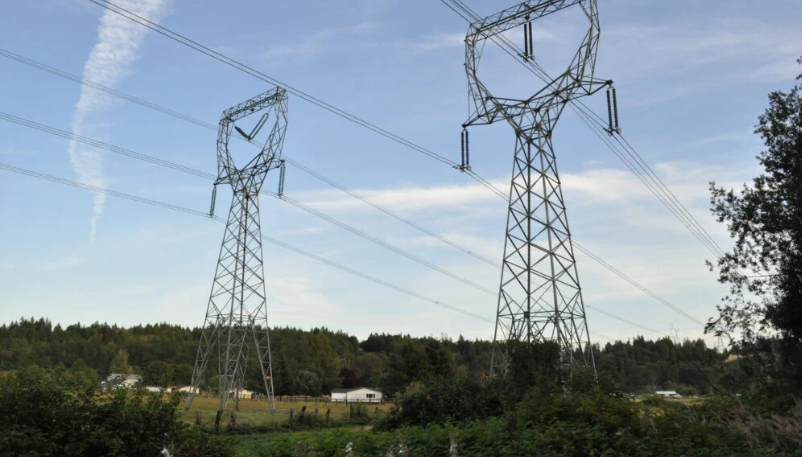
Recently, the utilities have been shifting the cost burden of transmission network upgrades onto developers of utility-scale clean energy projects. These developers are now being forced to pay for shared infrastructure without payback or at high interest rates, making their clean energy investments even more difficult.
These are complex subjects, and while we advocate for distributed energy, large-scale solar and wind can be part of the solution. The successful and tested model for such projects is for the developers to receive reimbursement from the utility over an extended period of time. So, what is needed is clear rules and stability to encourage more investment, not misleading narratives.
|
|
Action Alert: Help Get the Plug-in Solar Bill across the finish line!
Small, plug-in solar units can be game changers. Similar to Community Solar, plug-in solar is an affordable way for renters and apartment building residents to lower skyrocketing energy bills. These units can be installed on balconies, in back yards, anywhere the sun is shining and an outlet is nearby. They don't need to be installed on a rooftop to help offset the electricity you consume.
Fortunately, language that enables plug-in solar in Minnesota has made it into the Senate Energy Omnibus bill. Utah has already passed plug-in solar and 30 other states have drafted similar bills.
Please email your State Senator today before it’s too late! Vote Solar has provided this convenient customizable template asking for a yes vote.

Plug-In solar op-ed just published in Star Tribune. Please amplify!
- By Dave Hage and Carolyn Ham, on behalf of Third Act Minnesota, working to safeguard our climate and our democracy.
The Legislature just has to pass this bill to make inexpensive and accessible plug-in solar available to Minnesotans.
Both plug-in and community solar are solutions that address rising electricity needs and increase grid reliability. That is because it motivates fast solar deployment near the places where we use electricity.
Clean Energy Solutions that don’t need new high-voltage transmission lines have more value from a purely environmental perspective as well.
|
|
Join Us in Building a Better Energy Future.
Save the Date May 18th
The next Minneapolis Clean Energy Partnership board meeting, which has a close connection with our origin story, will be on the morning of May 18th. The exact location and time are TBA but will be posted on our Facebook page and hopefully on the website.
Join us at the April 25th Resilience Fair

Community Power will be tabling under our Good Energy Connections Banner from 3-6 PM at 3104 14th Ave S. Minneapolis. Stop by our table to:
- Find out your home's "energy personality".
- Test your energy knowledge
- Pick up a free energy-saving device
- Sign up for a meeting with your Neighborhood Energy Navigator!
Community Power has contributed to the Shadow Report to the UN Human Rights Council
Community Power's passion for clean energy and the clean energy transition isn't accidental, it stems from our belief that we must act to slow down climate change - and that racial justice, equity and a better future for Minnesota all depend on it. We also know that our convictions have support and echo in the large body of national and international jurisprudence around these issues. Titled, " The United States Abridges the Right to a Clean, Healthy, and Sustainable Environment," this report shows the legal underpinnings of how and why we must continue to fight for equitable climate action. Our thanks to the authors and other submitting organizations: World Without Genocide, Genocide Watch, ImPact Coalition on Strengthening International Judicial Institutions, and the Minnesota Center for Environmental Advocacy. We quote from the report's Issue Summary on page one to highlight why we decided to get involved:
"Environmental racism harms marginalized communities and exposes them to increased vulnerabilities related to climate risk, disaster recovery, and climate adaptation efforts. The climate crisis is a “threat multiplier” for health and safety for already-marginalized populations including women, girls, and gender-expansive people; Indigenous people and people of color; the poor; the elderly; the disabled; and future generations."
Tell your legislators to Support Battery Recycling & 100% eWaste Collection!
Battery waste presents a serious challenge for Minnesota, and our current recycling systems lead to dangerous results - with hearings expected in the House & Senate, contact your legislator to show our support of this policy! Take Action: https://cleanwater.org/actions/support-battery-recycling
Additional Articles:
Edison executive pay soars despite devastating Eaton fire - Los Angeles Times
- By Melody Petersen, March 18, 2026
- More evidence on why it's time to break up energy utility monopolies. Entire blocks of homes and 19 lives in Altadena, California, were destroyed by the Eaton fire in January of 2025. Because those impacted have no other choice for their electricity, executives can reward themselves with massive payouts even when their outdated infrastructure fails and causes tragedies.
Minnesota utilities to deploy 'magic balls’ to help clean energy transition (MPR News)

- Yes, please! to "Magic balls" giving us more transmission capacity for low cost, without the 10-20-year wait to build new lines.
Third Act Turns Up the Heat on ICE Affiliations – Minnesota Women's Press
- The Resistance to ICE that the Twin Cities put up is formidable, including from organizations that were formed to work on climate justice like Sunrise Twin Cities and Third Act Minnesota.
Job Openings:
Our Streets is looking for people who care deeply about equitable transportation as it intersects with reparative and environmental justice. Does this sound like you? Consider applying for the following positions:
Applications will be reviewed on a rolling basis until the positions are filled.
Job Boards:
Open State Advisory Positions:
Together, we can create an energy system that works for everyone. Ready to make an impact? Visit our website at www.communitypowermn.org or reach out to us directly today. Let’s create change—together.
Lee Samelson & Brian Krohnke
|
|
|
|