|
In this issue:
- Utility Profits & CEO Pay - A Great New Report from EPI
- Effects of the Iran War on Energy
- Data Centers & The Minneapolis City Council
- Staff Changes at Community Power
- State Legislative Session Recap: What did or (didn't) happen?
- June 4th Local Energy Action Under Federal Rollbacks Webinar + More Events & Articles
- Photo credit for header/hero image Microsoft as found on CNET
Xcel fends off legislation to address surging CEO pay amid record profits and customer struggles
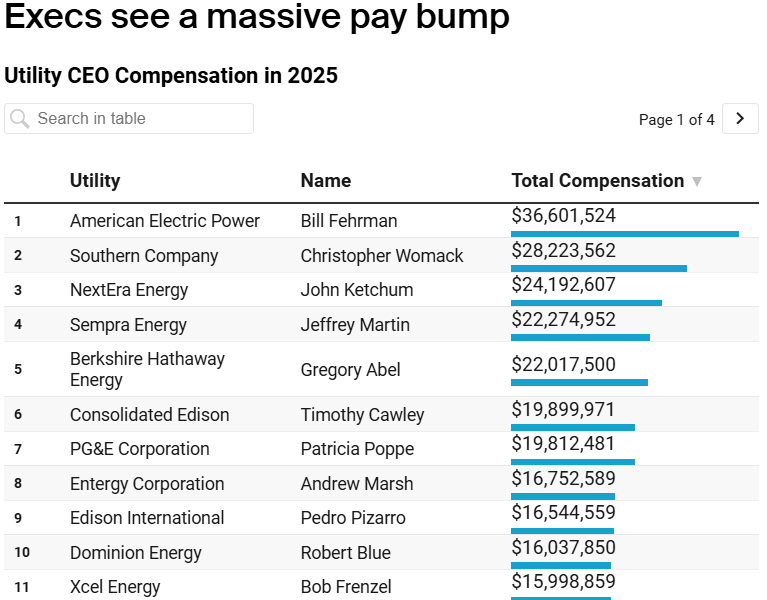
Xcel Energy just gave their CEO, Bob Frenzel, a 45% pay increase, up from the $15,998,859 he received in 2025. Xcel ratepayers (you and I) are on the hook to pay for that compensation because they are the monopoly... unless there is a legislative fix.
In our state legislative session, which just wrapped up, bill HF 76 (by Representative Emma Greenman) would have required that utility executives' annual compensation, above the amount the governor makes, come from other sources besides ratepayers. Shareholders perhaps? That part of the Ratepayer Protection Act did not receive enough votes to clear a procedural threshold in committee.
Lobbyists for Xcel and some legislators claimed the bill to be unnecessary, on grounds that the MN Public Utilities Commission already holds them in check.
Jim Pearson, director of regional government affairs for Xcel Energy, stated “Historically, the Public Utilities Commission has permitted only a small portion of executive compensation to be recovered from customers.”
However, that feels duplicitous knowing that Xcel Energy has fought in court for years to force customers to pay more for executive compensation after the PUC ruled to rein in those costs.
While there is some merit to incentivize utilities for performance (rather than for capital expenditures) by giving utility executives bonuses for customer satisfaction, that isn't the case with Xcel. In 2025 rising customer complaints prompted regulatory inquiries in both Minnesota and Colorado.
While Xcel had developed a customer satisfaction metric, they replaced it with a less-detailed version in 2025 after Frenzel fell short of meeting its own goals in 2024.
Instead, the CEO pay incentive structure we are seeing on a national scale is aligned with shareholder profit, as shown in a wonderful new article (worth reading!) from Energy and Policy Institute "Utility CEO pay surges amid higher profits, customer struggles" (By Jonathan Kim, April 21, 2026)
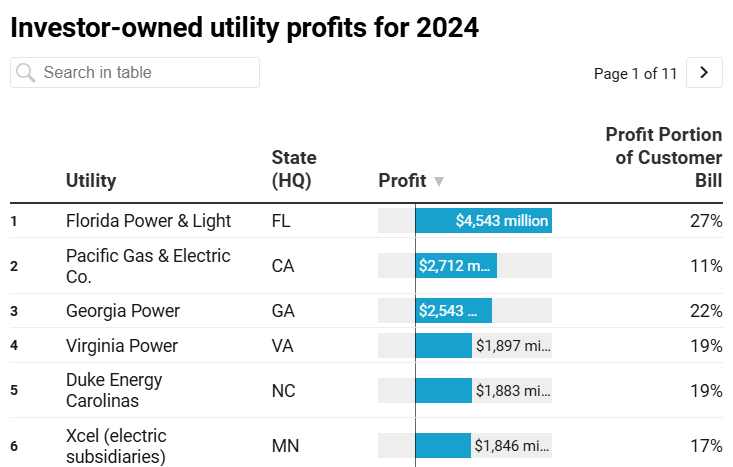
Xcel reported a record $2.2 billion in profits last year alone. 15.4 cents per every dollar collected from Xcel bills went straight to profits (17% in 2024) as they seek to raise rates even higher.
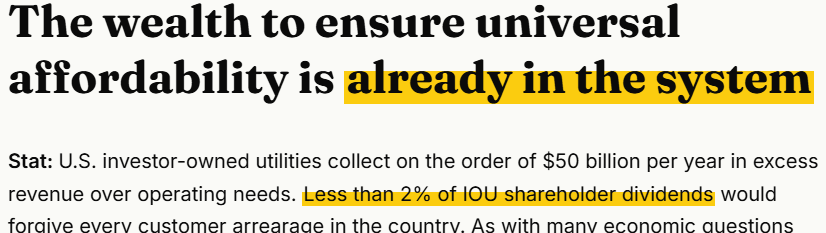
Just 2% of Profits Could End Utility Shutoffs
If we would be able to take just 2% of utility dividend payments to shareholders then we could end the harmful, immoral practice of utility shutoffs. That is when utilities cut cash-strapped families off from the internet and refrigeration, risking much of their food and medicine to spoil. Utilities executed 13 million of these unjust shutoffs in 2024 alone.
Jeff Bezos' Washington Post editorial board stepped into the conversation with the maddening suggestion of gutting of clean energy programs to pay for shutoffs, conveniently ignoring the apparent sacred cow of utility profits.
That is a cynical game of divide-and-conquer to pit clean energy and affordability advocates against each other which is out-of-touch given how clean energy helps affordability nowadays.
Overall, this insistence upon tithing to millionaire CEOs over honest efforts to help those increasingly struggling to afford ever rising utility bills (along with other expenses) reflects misaligned incentives and severely skewed priorities.
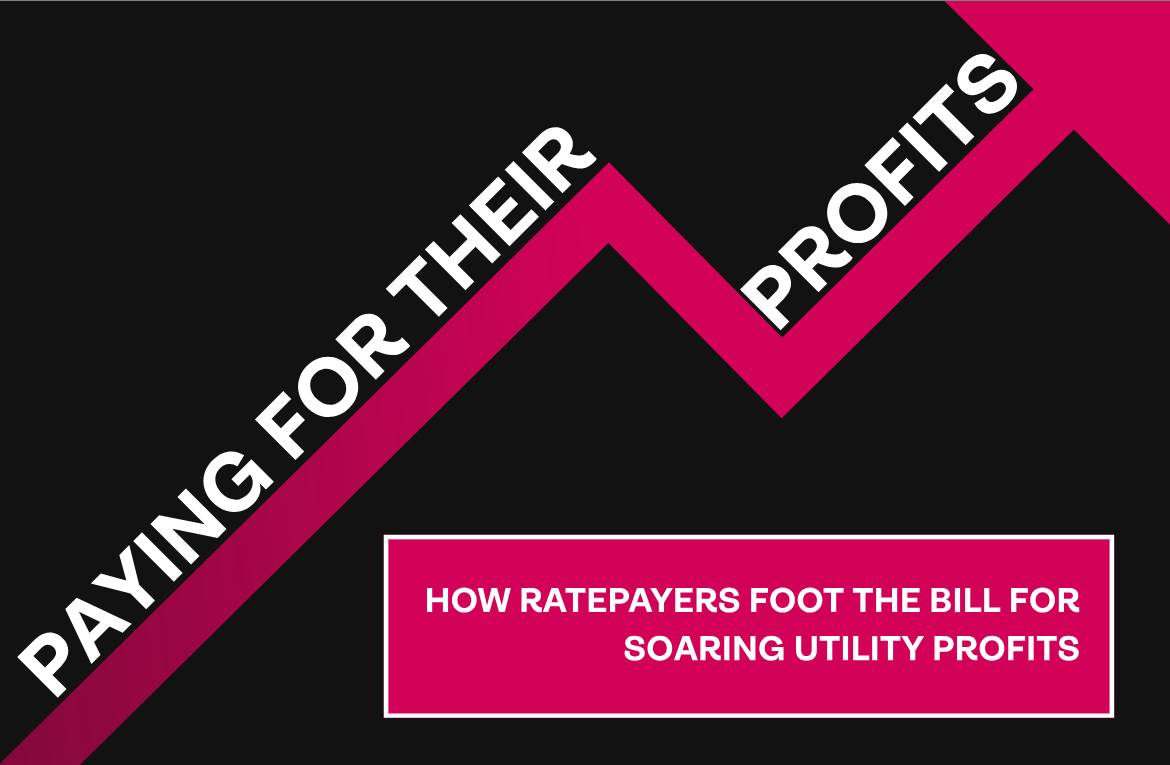
Since 2017, average US utility CEO pay has risen 47 percent. That significantly outpaces both inflation and average wage growth for American workers. U.S. utilities have paid their CEOs more than $5.2 billion since 2017.
|
|
|
How the US-Iran War affects energy in Minnesota
As the US-Iran war impacts energy markets across the globe, Community Power has been exploring the potential consequences and opportunities opened by the crisis. A new report by our fellow, Atticus Friendly, outlines some of the expected effects of this global oil crisis, both internationally, in the United States and Minnesota. In particular, it outlines an increase in global energy prices, consumer goods prices, and global food shortages. It hurts Minnesota farmers as prices for fuel and fertilizer spike. All of this points towards slower economic growth and higher inflation. Atticus cites the history of oil crises in the 1970s, and other economic parallels to explore plausible outcomes and opportunities for energy reform opened by the catastrophe.
|
|
| |
|
The Data Center boom ties in with monopoly utilities increasing shareholder profits by overcharging captive customers. Does that apply to Minnesota?
There is growing concern nationwide about data centers because just one building could consume as much power as a mid-sized city. In Georgia, people’s wells dried up because a data center drew from the same aquifer to cool its computer equipment. It also gives mining companies a justification to extract from the Boundary Waters because GPU components need to be replaced across the life of a data center. Elon Musk's massive xAI data center in Memphis echoes old patterns of environmental racism. On top of it all, data center companies in Minnesota use nondisclosure agreements (NDAs) so that local government officials can't tell residents about proposed data center projects and the impacts it would have on the public. The State Legislature failed to pass a bill to ban the use of NDAs.
Where does Community Power and our focus on energy democracy fit in? (See Community Power staff on Fox 9.)
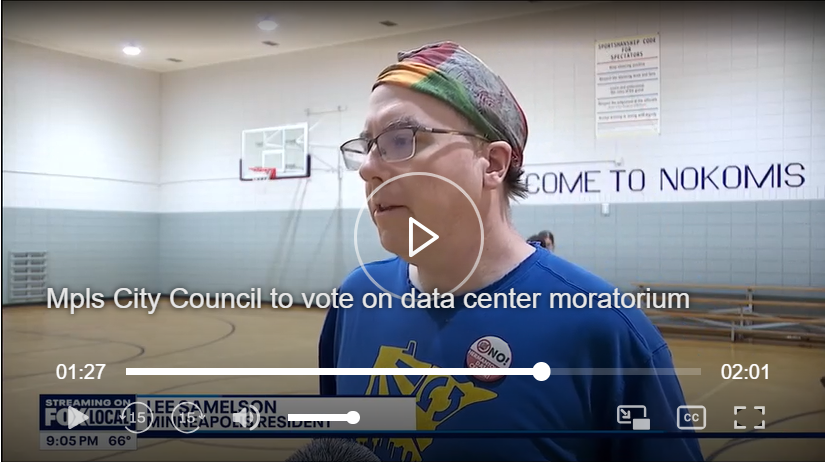
Here is some further context which that brief clip could not cover:
On the one hand, the increased electricity demand from new data centers will require more of the type of power grid infrastructure investments that electric utilities receive guaranteed profits from, while ordinary households are typically left paying the tab. For example, Minnesota Power has asked the MN PUC for permission to build a new gas plant for data centers. And that sounds like more of the same: another way for monopoly utilities to overcharge captive customers to increase shareholder profits.
On the other hand, some argue that the data center boom could provide the perfect impetus for grid modernization that will benefit all ratepayers. Sounds lovely, but seeing is believing.
Community Power founding board member John Farrell laid out that out in his article “We aren’t ready for AI: The energy debate we need to have” along with some parallels between tech monopolies and investor-owned utilities, writing that both “deal in public handouts, receive special deals, and sidestep public oversight.”
At the very least, sensible policies must be in place to shield ratepayers from increased electric bills such as data center companies being required to pay for the grid upgrades and other costs of their energy use.
In 2025 Minnesota passed a law aiming to shield ratepayers from the costs of providing power to serve large new data centers above 100 MW. The MN Minnesota Public Utilities Commission took a crucial step to implement these protections.
But proposed laws to set a regulatory framework for data centers didn't make it through this year. So, it will be up to local governments to set standards for smaller data centers. For context, consider that the Sleep Number data center in downtown Minneapolis and another proposed by Sherman Associates on 2nd and Washington, that have been in the news, are around 20 MW. But if enough smaller data centers are co-located, it could add up to the footprint of a hyperscale data center, the type used for generative AI.
That segues into the big question. We see a pattern of large tech companies and billionaire investors benefiting from data center growth while local communities and our environment are left to bear the costs. But to what extent does that apply to Minneapolis locally?
|
|
Minneapolis City Council held a 2-hour debate on a data center pause & set a June 16th public hearing for you to weigh in!
The Minneapolis City Council held a spirited 2-hour discussion on data centers last Thursday. Then, in an 8-5 vote, they gave initial approval to a 6-month pause on data center development. It was amended by Ward 6 Council Member Jamal Osman (who voted in favor of the pause) to allow for data center development in the downtown core for new sites up to 350,000 sq ft.
Many council members (CMs) publicly shared their views on the topic well before the vote. On May 13th, for example, Ward 12 CM Aurin Chowdhury, the author of the pause, hosted a community meeting on the issue. She expressed the view that a pause is necessary to give the city the leverage needed to achieve a regulatory framework to protect the public interest.
CMs Rainville (in his Ward 3 Newsletter) and Shaffer (in her Ward 7 Newsletter and in her Star Tribune op-ed) have expressed concern that the pause would hinder the potential for smaller scale data centers, (like the Sleep Number building), to revitalize downtown Minneapolis and its tax base. In other interviews, CM Rainville explained that there are about fifteen smaller data centers already operating in downtown Minneapolis, for decades in certain cases- implying that concerns from the high-profile stories we hear about hyper-scale data centers should not be conflated at the local level.

(Photo: CMs Rainville and Osman tour downtown data center.)
Council Member Soren Stevenson also included a section on data centers in his Ward 8 newsletter, and on Thursday cited hearing from numerous constituents who want no data center development locally rather than a temporary pause.
The council did unanimously pass a directive for our Legislative Research department to produce a comprehensive policy report on data centers.
This debate is far from over.
Procedurally, this pause has to be voted on again by the full council on June 25th but is in effect in the meantime. If it passes, it will go to the mayor for his signature or veto. Additional data center legislation will also likely be up for a vote.
Your chance to weigh in!
The City Council will hold a public hearing where you can share your thoughts about the pause or data center regulation in the city at a session of the Business, Housing & Zoning Committee. It will be at 1:30 PM, June 16th at the council chambers.
In our view, we must insist that the data center companies:
- Pay money into city climate and equity programs.
- Use renewable power to meet all of their energy needs (to comply with Minnesota's carbon-free electricity law).
- Adopt circular or closed-loop water management and adhere to strict heat discharge regulations rather than evaporative cooling.
- Send waste heat into thermal energy networks (TENs) to other buildings which could use it. TENs was the main topic of discussion at the May 18th Minneapolis Clean Energy Partnership board meeting.
|
|
|
|
|
Our Co-Executive Director who has helped us greatly with finances and HR the past three years, Leticia Jones, has decided to move on from Community Power this month. We wish her the best of luck in all her new endeavors and hope she stops by from time to time to say hello.
As she continues to assist us in ensuring a smooth transition, we have yet to say "goodbye," but understand that people and opportunities change.
Best to you Leticia!
|
|
The Work _______________________________________________________________________
Advancing Energy Democracy
Organizing our efforts to maximize impact and drive change.
|
|
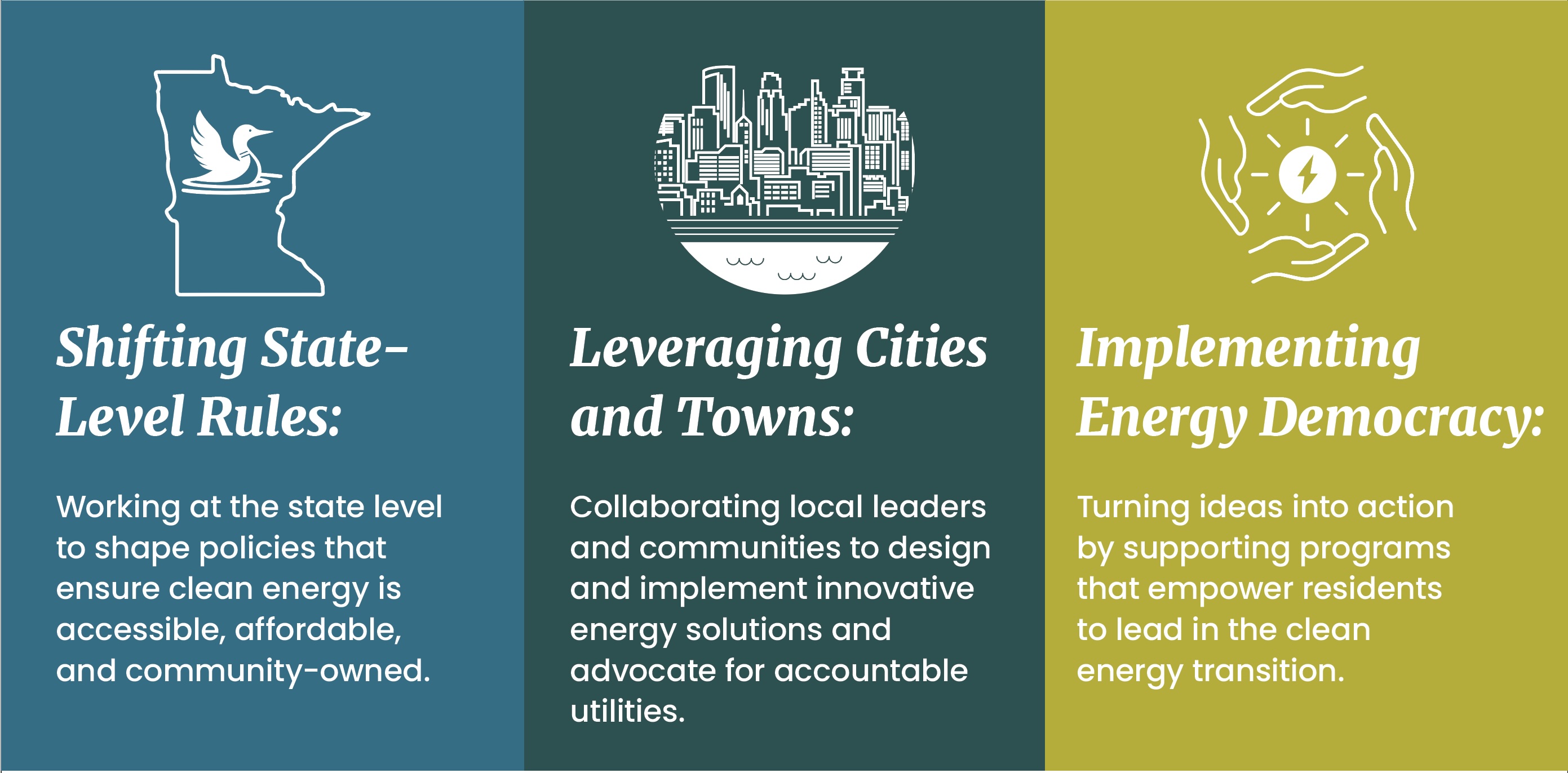
Community Power channels its expertise into three focused program areas. By addressing challenges at the state, city, and grassroots levels, we’re building a sustainable and equitable energy future for all.
___________________________________________________________________
State Legislative Recap on Energy Affordability

Community Power and a coalition of more than 40 partner organizations, pushed to secure state funding for Energy Assistance (SF 486). That is because current federal Energy Assistance funding is only enough to reach about 1 of every 4 qualified households. While the State Senate passed a $15 million appropriation for Energy Assistance, this measure (like so many other bills we had pitched support for) was not even put to a vote in the State House. The Minnesota Reformer covered some stories of utility shutoffs that made it clear to regulators and legislators in Minnesota that the need for energy assistance has risen.
Not much energy legislation passed at the state capital this year as this recap from the Citizen’s Utility Board lays out.
The flip side of it being a quiet year for energy legislation at the State Capitol was that many damaging bills also did not pass into law. For example, Xcel Energy brought forth a bill (HF 3830) which would have made the Gas Utility Infrastructure Cost rider (GUIC) permanent. That would be just another way to shift the risk from shareholders to ratepayers. As we shared in our April newsletter, it would have made it easier for utilities to charge customers for the company's choice to sink millions of dollars to prolong investment into the gas system.
The one piece of energy-related legislation that made it through with flying colors was renaming Minnesota's Community Solar program after Melissa Hortman.
In response to calls for overturning the moratorium on new nuclear power plants being built in MN (which also didn't pass) there was $500,000 for a study of the potential impacts of new nuclear power generation in Minnesota that passed as part of the tax bill.
As far as one long-term consideration that is important to study, this brings attention to one story out of California. A former nuclear reactor and rocket testing site that had spotty cleanup was in the path of the growing Sandy Fire with shifting winds.

Wildfire Crews Race to Keep Fierce California Blaze from Former Nuclear Reactor Site
- By Steven Rodas & Nina Dietz. Inside Climate News. May 19th, 2026
|
| |
|
Additional Upcoming Events:
Come see the June 4th Webinar! "Tools for Local Energy Action Under Federal Rollbacks"
One of the three speakers will include former City Council member Katie Cashman, who will discuss utility franchise negotiations in Minneapolis. It is hosted by the Institute for Local Self Reliance and will take place at 12:30 PM CT.
Queer + Environmental Trivia Night hosted by the Climate Justice Committee (CJC)

Kick off Pride Month the evening of Saturday June 6th at 6 PM. Come by to win fun prizes & learn some movement history! CJC is a purely grassroots group organizing action on local environmental justice.
It will be at the Lucy Parson Center 4100 28th Ave S. Minneapolis.
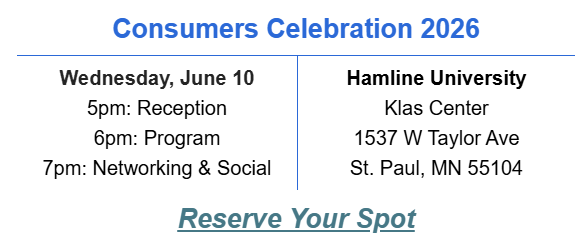
The Citizen's Utility Board (CUB) Annual Celebration
Come support our partner organization CUB as in their ongoing mission to fight back against excessive rate increases and corporate profits plus building the path for an affordable and equitable clean energy transition.
There are options for discounted or free tickets to ensure price isn’t a barrier and a full meal is included!
|
|
Additional Articles:
Legislature OKs last $4M for Minneapolis Roof Depot project
- The East Phillips Neighborhood Institute finally has a clear path to purchasing the site after funding was included in the MN State Legislature’s bonding bill.
-
By Andrew Hazzard, Sahan Journal, May 20, 2026

Tucson, AZ secures $2 million per year commitment from utility *shareholders* for local investment in clean, affordable energy due to franchise negotiations.
- The recent public power campaign made this happen (and would still be superior)
- Tucson Sentinel, Apr 9, 2026
-
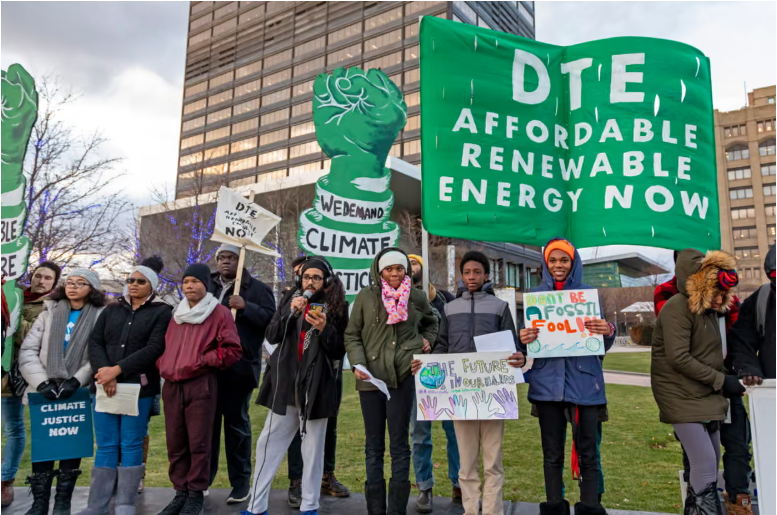
Wildly unpopular for-profit utilities are resorting to dark money funding of fake grassroots groups in Maine, Florida, Michigan (+ more) to fend off public takeovers in communities pushing for more publicly owned electricity.
- The Guardian, May 7th, 2026
|
|
Join Us in Building a Better Energy Future
Job Boards:
Open State Advisory Positions:
Together, we can create an energy system that works for everyone. Ready to make an impact? Visit our website at www.communitypowermn.org or reach out to us directly today. Let’s create change—together.
Lee Samelson, Brian Krohnke & Alice Madden
|
|
|
|