|
In this issue:
- Powerful Conversations Event March 29th
- Our New Blogpost on Xcel's latest bid for monopoly control
- Plug-in Solar Action Alert + Article below
- Calculating Excess Utility Profits
- Data Center Action Alerts
- One Data Center that Plans to use 100% Renewable Power
- Updates on Minneapolis & ICE
- Job Posting
Join us at Macalester College for a special Powerful Conversations event: March 29th
Come hear what they don't teach us in school as we demystify the odd behavior of energy utilities. Understanding the energy sector is a key step towards democratizing it. Since our beginning in 2013, we've been holding popular education events that we call Powerful Conversations with community groups, allies, and friends.
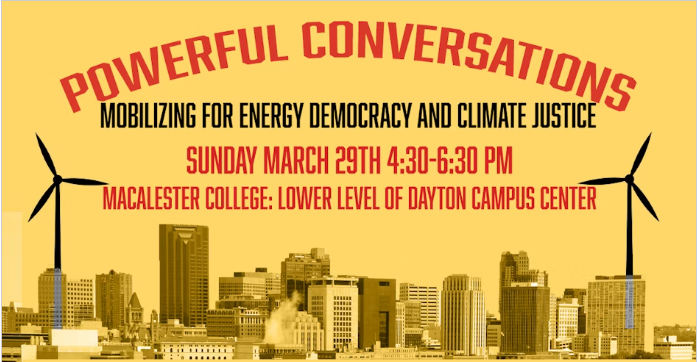
This event, for the second year in a row, is graciously hosted by the Macalester hub of Sunrise, a national youth climate movement. It will be on Sunday, March 29th from 4:30 PM to 6:30 PM on campus, with the last half hour for informal mingling. Click the RSVP link below to let the hosts know you'd like to attend and please help spread the word:
https://www.mobilize.us/sunrisemovement/event/913677/
We aim to share just enough about the energy utility system to spark attendees' curiosity to learn more! We're also going to listen. We want to share ideas with attendees and hear your concerns. It is particularly important for 2026 that we articulate ways to advocate for both climate justice and lower energy bills. They are intimately connected!
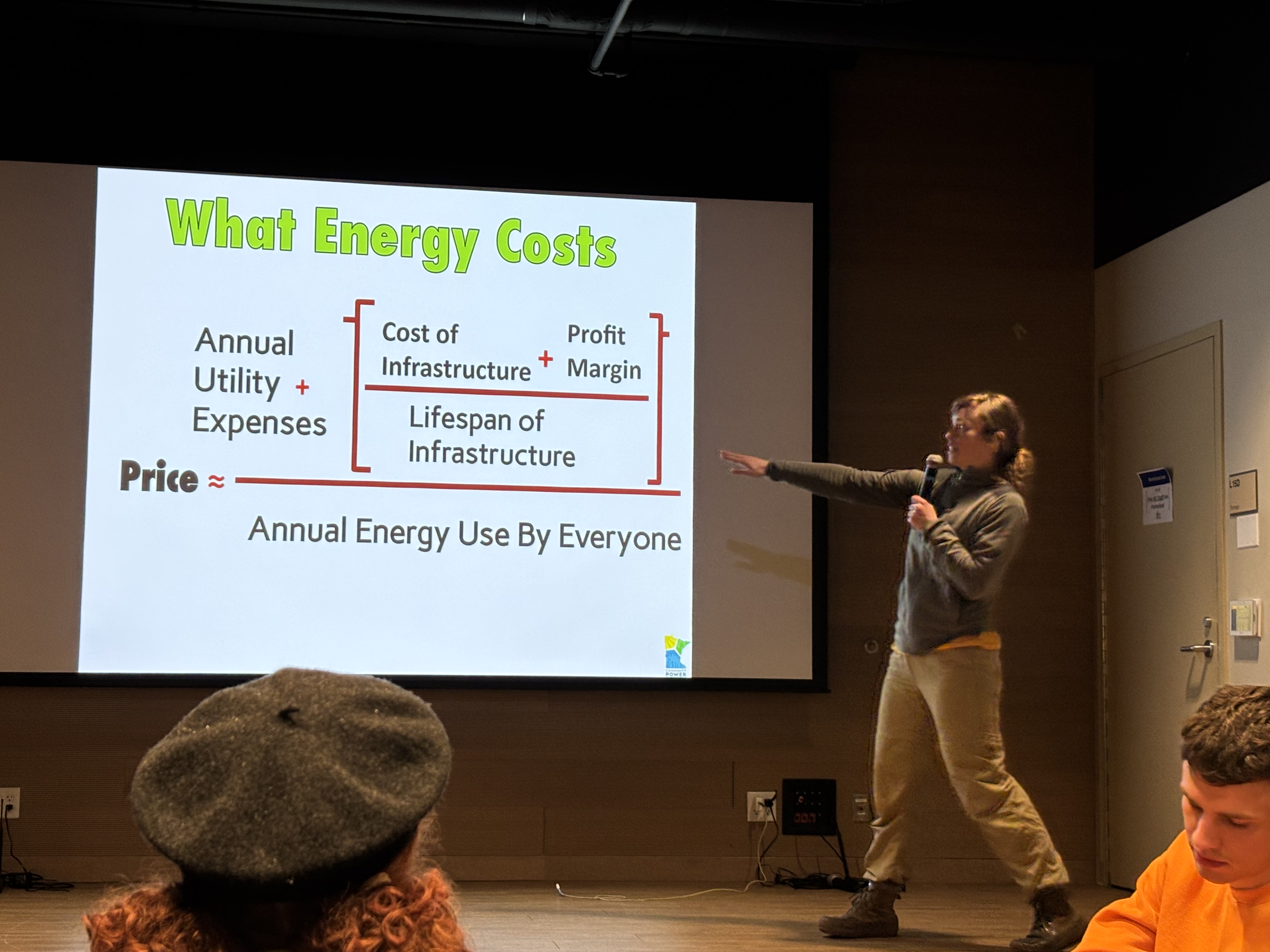
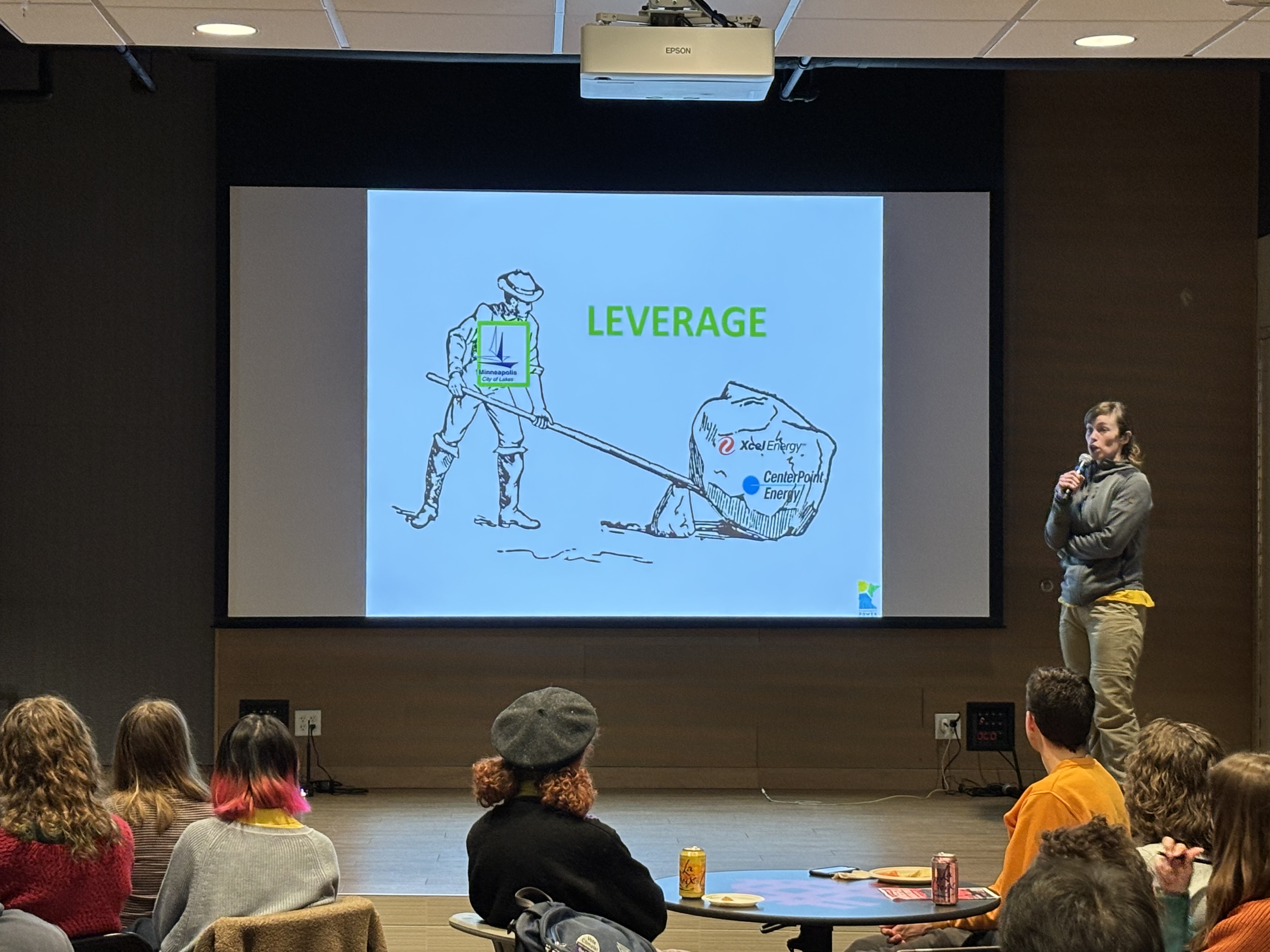
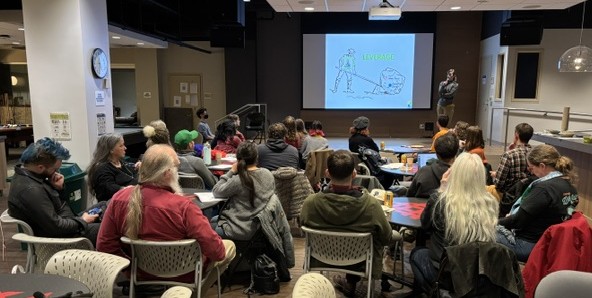
(These photos are from the Powerful Conversations event that Sunrise Macalester hosted last year)
Published author and founding Community Power board member, George Crocker, will be selling autographed copies of his book: About Power: How to Democratize Electricity Now. Other organizations such as Vote Climate have committed to attend, so this will be a networking opportunity with community members sharing opportunities to get involved locally. Knowledge is power!
See Facebook Event Page.
Reason #1 to attend (and help us organize more events): Xcel Energy is making its latest bid to expand its monopoly control of our energy system.
In our new blogpost we expose Xcel’s attempt to own and control the next stage of grid modernity:
1) Utilities like Xcel Energy finally became agreeable on deploying renewable power once they figured out how to get it to mimic the familiar central station power plant model. That model makes new power generation much easier for them to own, control and rate base so that they can get their guaranteed profit on it. The reason is because the capital requirements of deploying renewable power in a centralized model (such as new transmission lines) are so are high that only the monopoly can participate.
2) For years, Xcel has tried to weaken programs such as community solar that help expand customer ownership of renewables (which they can't get the same guaranteed shareholder returns on) by pivoting to various expressions of preference to do utility-scale solar (which they can).
3) But now Xcel has seen the writing on the wall. Decentralized renewable energy production has dramatically faster deployment and in most cases lower overall costs than highly centralized renewable power models that depend on building new high voltage transmission lines.
So, that brings us to Xcel's latest bid to prolong its monopoly control in the emerging phase of our energy system. It is a proposal where they get to own the batteries that they use to store distributed renewable power needed for what we call Virtual Power Plants (VPPs). Xcel now brands this Distributed Capacity Procurement proposal as "Capacity*Connect". It has a hearing in front of the MN Public Utilities Commission (PUC) on March 26th where they will either approve, deny or modify Xcel's proposal.
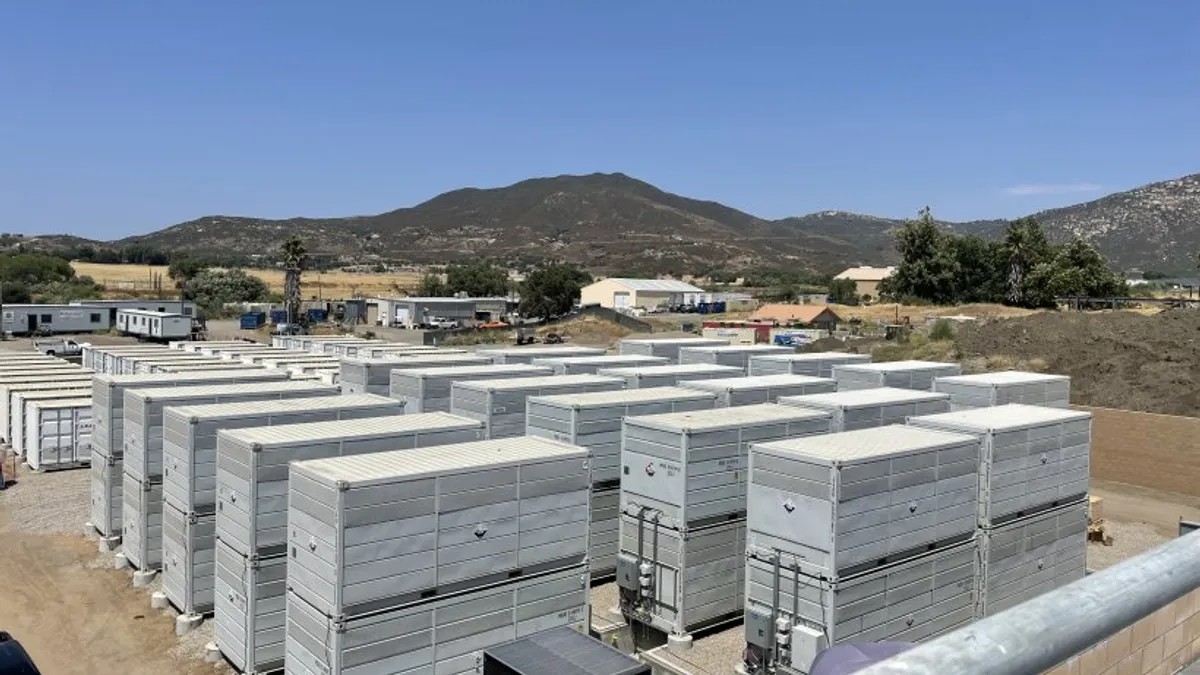
In a better world, we would have a win-win-win scenario for sustainability, grid resilience and affordability through community owned Virtual Power Plants.
VPPs are a new way to more affordably meet demand by pooling energy from people’s solar panels, batteries, and smart appliances. These networks are called "Virtual Power Plants" because they replace the need for central station power plants. Imagine, decentralized VPPs that are cleaner, faster to deploy and more flexible than traditional fossil fuel burning power plants.
But when you factor in the investor-owned utility obligation to serve shareholder profits on top of program costs, it is all too much to stomach and that would come at the expense of savings for customers. We want a Virtual Power Plant policy that saves customers money, not one where shareholder obligations create costs that the utility passes onto us.
In addition to an anticipated PUC ruling on Xcel's Capacity*Connect program on March 26th, there is a bill at the state legislature (HF 2986) that intends to sets guidelines for the PUC and others to follow on Virtual Power Plants. Community Power and partners certainly hope the final version of this bill does not have provisions that similarly lock in monopoly control.
|