
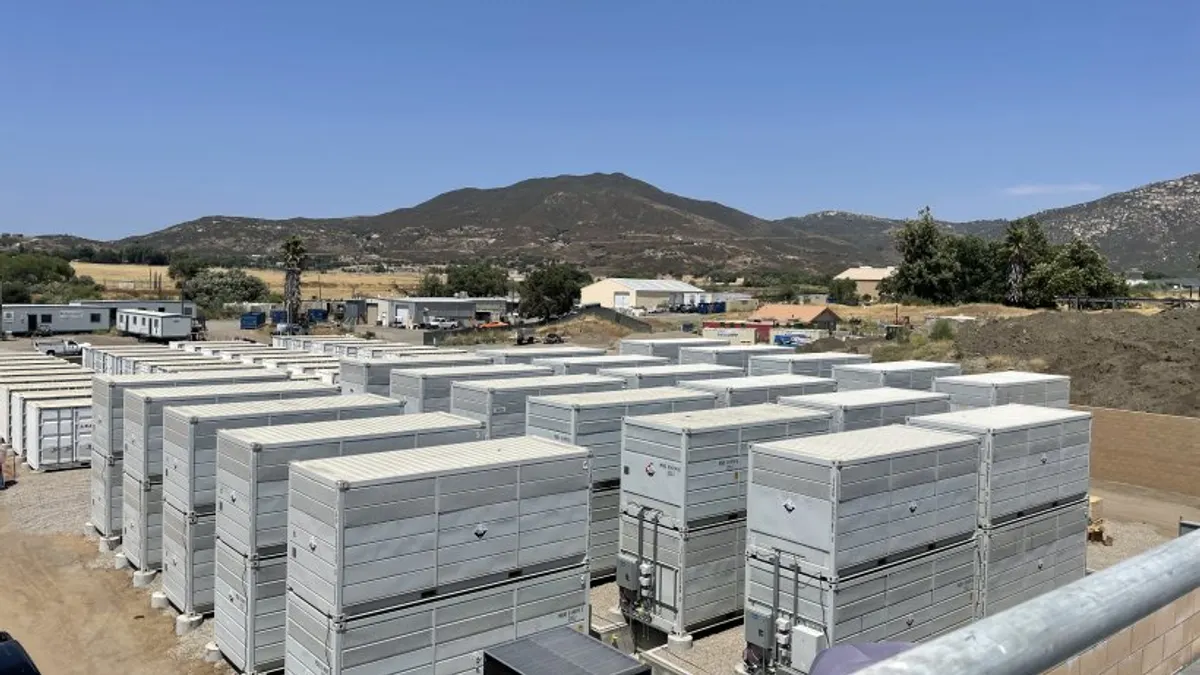

Community Power and partners have known that local distributed renewable power plus battery energy storage is a key to supporting a more cost-effective electric grid. And Xcel Energy has since seen the writing on the wall.
Background on utility preference for centralized over distributed renewable power
Utilities have long tried to defend and prolong their familiar central station power plant model expressed a preference for traditional transmission-connected clean energy solutions. For example, Xcel has tried for years to undermine community solar by claiming to legislators and regulators that utility-scale solar to be more "cost-efficient". Back around 2015, Xcel also released some ads depicting utility scale solar as "solar done right" in response to community solar getting much bigger interest than they expected.
Deploying solar power in a way that mimics their familiar central station model makes it easier for them to keep new renewable power under their thumb. The capital costs involved with utility-scale renewable projects are too prohibitively high for anyone else other than utility actors to own and is thereby compatible with the utilities' top priority of maintaining market share. The same logic holds, Xcel wants to own renewable energy assets so they can earn their guaranteed 9.25% profit from them (their ROI in MN).
However, the utility-scale solar energy industry is facing a challenge of growing network upgrade costs. Centralized and transmission-connected solutions can no longer have a monopoly claim on "solar done right", either on time for Minnesota’s 2040 100% renewable electricity goals, or on budget terms. Xcel is noticing.
Distributed renewable power is clearly the quickest and least expensive form of new power generation to add at a time when demand is growing. Distributed energy resources, such as solar and storage, have dramatically faster deployment and lower overall long-term costs. Decentralized energy production avoids the delays associated with building new transmission lines (from 8-20 years) as well as the land use conflicts often exploited by anti-solar, pro-fossil fuel astroturf groups.
Like we’ve written before in previous newsletters and blogposts, this makes decentralized networks of community-scale renewable power with battery storage a key to cost savings and energy affordability. These are known as "Virtual Power Plants" because they prevent utilities from having to build new central station power plants and provide a new way for us to more affordably meet demand.
To conclude this section, distributed renewable power makes too much sense for Xcel to hold it back any longer.
So, what is the next twist in the plot?
Xcel Energy finally got around to endorsing the idea of distributed energy storage back in 2024. Seen one way, if we stop complaining for a second, we could take the win. This incursion of Xcel into the world of VPPs is a sign that Xcel Energy has finally understood that distributed energy is the way of the future. But they have coupled it with insisting that they be the ones who get to own and profit from all of the battery assets that accompany distributed renewable energy.
So as a result, Xcel is making a bid to own the next stage of grid modernity through their Distributed Capacity Procurement (DCP) program, now branded "Capacity*Connect".
This distributed storage pilot project (Docket # 25-378) came before the Minnesota Public Utilities Commission on April 2nd.
It was a crossroads for Minnesota between adopting a Virtual Power Plant model that will benefit all Minnesotans, and one that won't work.
The MN PUC enables Xcel's monopoly framework
The PUC approved Xcel's proposal meaning they will deploy 50–200 MW of distributed battery storage at a cost of $152–$430 million (Docket 25-378). But frustratingly, if not surprisingly, the PUC declined to challenge the monopoly ownership framework.
What does this mean for you and I? To put it in plain language, it means Xcel shareholders will get to pocket the clean energy savings that could have gone to customers.
That is because scalable, cost-effective, third-party clean energy solutions will be shut out given Capacity*Connect being a closed pilot locking us into an exclusive utility-owned model.
This is Xcel’s latest effort to retain and expand its monopoly control of our energy system. In their view, they should buy energy from VPPs and also own the VPPs, and we’re starting to smell whiffs of conflicting interests, you?
This is explained in more detail in the following press statement the Minnesota Solar Energy Industries Association (MnSEIA), the Solar Energy Industries Association (SEIA), and the Coalition for Community Solar Access (CCSA) released in response to the version of Xcel Energy’s Capacity*Connect distributed storage proposal getting approved.
What the PUC approved is technically only a pilot project to inform future development. Another article covering this same story gives hope that this initial pilot will set the stage for a more competitive and distributed model in future phases:
Xcel Minnesota is building a first-of-its-kind virtual power plant | Canary Media
By Jeff St. John. 8 April 2026
When decentralized networks of community-scale renewable power are coupled with battery storage, they are known as "Virtual Power Plants" because it saves the utilities from having to build new central station power plants in order to more affordably meet demand.
How do Virtual Power Plants work?
Here is a short video on this from Solar United Neighbors called: Virtual Power Plants: A Better Grid Now!
VPPs pool energy from people’s solar panels, battery storage, and smart appliances, heat-pump water heaters with digital controls, and even electric cars through the use of Distributed Energy Resource Management Software (DERMS). These software managed networks are known as Virtual Power Plants because, by working in concert, these smart energy devices can displace the need for traditional, carbon-intensive, centralized power plants. Another plus-up that VPPs deliver is better grid stability and huge sustainability benefits. Here is how VPPs work:
- First, distributed energy resources such as home batteries, solar panels, electric vehicles, and smart thermostats are managed by advanced, real-time DERMS software to monitor, coordinate, and control connected devices.
- Then, the software operator, or aggregator, combines these individual energy assets, functioning together into a single collaborative, flexible power supply.
- For example, say, 1,000 houses don’t heat water during peak grid hours, that contributes to a lower overall peak demand. Or, say, those same houses on a hot summer day pre-cool with their heat-pumps in the afternoon, before the after-work surge. Or perhaps, people in the network charge their backup batteries during peak sun with solar, or in the dead of night when the grid is at its least strained.
- The result of all these small energy decisions, once aggregated, can be directed to charge, store, or discharge electricity based on grid needs, and so avoid the need for megawatts of newly generated power.
Examples of successful Virtual Power Plants models around the nation
Virtual Power Plants are a creative way to reduce the cost of electricity for all ratepayers, while allowing for more consumer choice. This matters because the skyrocketing demand caused by data centers and AI putting huge upward pressure on electricity prices.
See an article on this unfolding national story:
More states look to virtual power plants to fight rising electric bills
- A dozen state legislatures are pushing measures to launch or expand programs that rely on customers’ thermostats, batteries, and EVs to relieve the grid.
- By Jeff St. John. Canary Media. 25 February 2026
Virtual Power Plants are already working in other states like California, Massachusetts, New York, and Texas to lower energy bills. Even in Minnesota, Great River Energy has made some initial forays into the market. One huge lesson learned across all these experiences is that if the components of virtual power plants are customer-owned, they provide cost savings to all and benefits to their owners. Participating customers can reduce their energy bills and earn income by allowing their aggregator to use and sell their resources during peak demand.
In these other states, Virtual Power Plants are third party owned because that creates competition much better than a monopoly utility could. Seen another way, this third-party investment doesn’t get folded into the utility rate base which later gets extracted from customers, again lowering overall costs. That competition and third-party investment is what lowers prices and delivers a better product to all users. This is a way to lower the cost of solar and battery adoption while leveraging private capital from homeowners and businesses to do so.
To draw a contrast, Michigan and New York lawmakers are considering virtual power plant bills that would prohibit utility ownership of participating distributed energy resources and require reasonable access for third-party aggregators. (By Brian Martucci, Utility Dive, March 25, 2026)
The only thing preventing Minnesota from joining the leading states in this exciting frontier is the right policy for VPPs - one that honors, rather than ignores lessons of what worked well in other states. While there is legislation on VPP policy being heard at the state capital, in the absence of a state VPP policy, Xcel Energy is trying to get the MN Public Utilities Commission (PUC) to approve a VPP system where they get to have ownership over the batteries and perhaps other components of the network.
What is flawed about Xcel's Proposal?
The initial VPP proposal put forward by Xcel Energy doesn't allow Xcel's residential customers to be a part of the Distributed Power Plant and thereby doesn’t guarantee savings. It also, explicitly, would give permission to Xcel to add their costs in implementing Capacity*Connect to the rate base, yet one more piece of infrastructure they can profit on.
That is an untested idea. Virtual Power Plants make the most sense if they are third-party owned, creating market driven incentives that lower the cost of adoption of solar and batteries by homeowners and businesses and attract new business, jobs, and innovation to their states in the process.
Again, the problems that stem from an exclusive utility-owned model are explained in more detail in this press release: "MnSEIA, SEIA, and CCSA Issue Joint Statement on the Approval of Xcel Energy’s Capacity Connect Proposal" | MnSEIA
Xcel has been trying to make the case that it can build more effective virtual power plants by owning and controlling its own batteries. But solar groups, consumer advocates and state agencies think customer-owned solar + batteries can do the job faster and cheaper. The MN Attorney General’s office wrote in its initial comments on Xcel's proposal that “it may be a uniquely expensive way to accomplish the same thing that other states have with less ratepayer money.” Xcel will get a guaranteed profit on every ratepayer dollar spent on the batteries, a perk that they would not get under the more familiar virtual power plant model.
In a better world, we could have a win-win-win scenario where decentralized virtual power plants are cleaner, faster to deploy and more flexible than traditional fossil fuel burning power plants. But when we add the investor-owned utility's obligation to serve shareholder profits on top, it's too much. Remember, their profit is our cost!
The utilities want to treat VPPs like any other power plant that they will be able to profit from, rather than maximizing the opportunity for affordability by letting the public buy assets for themselves. In our view, the utilities should not be aggregators, because clearly, they would be selling to themselves, and that opens the door for all kinds of shenanigans.
Xcel’s proposal does not guarantee savings, in fact it most likely will cost Xcel money, which Xcel will pass on to ratepayers. Same story, different day.
John Farrell of ILSR and Community Power invited Shannon Anderson from Solar United Neighbors and Will Kenworthy from Vote Solar to join his podcast Xcel Owns the Batteries, You Pay the Bill — Episode 269 of Local Energy Rules to discuss the Minnesota PUC's unfortunate decision for utility-owned distributed batteries.
The PUC Decision we would have liked to see
While it is great that the MN PUC is in the process of authorizing at least some VPP program in our state, coalition partners insisted to the MN PUC to scrap Xcel's proposal and create a policy that enables families and small businesses across the state to save money while becoming more energy independent, rather than seeing our potential savings getting funneled into shareholder profits.
For example, Clean Energy Economy Minnesota submitted initial and supplemental comments reflected in the briefing papers and decision option matrix
In another example, the PUC should have instead approved a framework that supports open, competitive participation, writes Coalition for Community Solar Access CEO Jeff Cramer.
He suggested the PUC needs to create a new proposal that does these three things:
- Expands competition by allowing for a competitive process where third parties can operate a Virtual Power Plant.
- Allows consumers with solar, batteries, and other energy controlling devices such as smart thermostats to participate in Virtual Power Plants.
- Requires Xcel to purchase grid services (more electricity to the grid at times of peak demand for example) from Distributed Power Plants at a rate that saves them money and thereby guarantees savings to Xcel Energy customers.
The outcome will have national implications.
But unfortunately for now, the Commission didn't move any of the third-party opportunities forward in the proceeding delailed in press release from MnSEIA and their partners in the docket.
Latest
"What About St. Paul?" The New Franchise Agreement Arrives!
Posted by Lee Samelson on September 25, 2026
August 2026 Community Power Newsletter
Posted by Lee Samelson on September 02, 2026
Mayor Frey: Protect the new $4 million for low-income weatherization
Posted by Lee Samelson on August 25, 2026